Most adults who lift weights or train regularly do well with about 0.7 to 1.0 grams of protein per pound of body weight a day (1.6 to 2.2 grams per kilogram). If you weigh 176 lb (80 kg), that's about 128 to 176 grams a day. If you don't exercise much, you can get by on less.
The number you see on most food labels and health sites is a lot lower than that. That number is a minimum for staying healthy. If you're trying to build muscle or lose fat, you'll get more out of eating well above it.
How much protein a day, by goal
Protein targets scale with body weight, so a bigger person eats more. These are the main recommendations, with an example for a 176 lb (80 kg) person:
| Goal | Grams per pound a day | For 176 lb (80 kg) |
|---|---|---|
| Minimum for healthy adults | 0.36 (0.8 per kg) | About 64 g |
| Adults over 65 | 0.45 to 0.55 (1.0 to 1.2 per kg) | About 80 to 96 g |
| Building muscle | 0.7 to 1.0 (1.6 to 2.2 per kg) | About 128 to 176 g |
| Losing fat while lifting | 0.8 to 1.0 (1.8 to 2.2 per kg) | About 144 to 176 g |
To work out your own number, multiply your weight in pounds by the grams per pound for your goal. A 150 lb (68 kg) person who lifts would land at about 105 to 150 grams a day. You can also let our free Protein Calculator do the math.
How much protein to build muscle
Lifting signals your muscles to grow, and your body uses the amino acids from protein to build the new muscle tissue. Without enough protein you still make progress, but you build less muscle than you could.
A large review of 49 studies found that eating more protein while lifting helped people gain more muscle and strength. The extra benefit leveled off at around 0.73 grams per pound a day (1.6 grams per kilogram), and some people kept benefiting up to about 1.0 gram per pound (2.2 grams per kilogram). So 0.7 to 1.0 grams per pound is a common target for people who lift.
If you're new to lifting or want one number to remember, 0.8 grams per pound (1.8 grams per kilogram) works well. It sits in the middle of the range and is easy to work out in your head.
How much protein to lose weight
Protein matters even more when you're eating in a calorie deficit. When you eat less than you burn, your body can break down muscle along with fat. Eating plenty of protein and lifting weights are the two most reliable ways to hold on to that muscle, so more of the weight you lose comes from fat.
The International Society of Sports Nutrition notes that lean people who lift may do best with even higher intakes while dieting. For most people, the top of the normal range, around 0.8 to 1.0 grams per pound (1.8 to 2.2 grams per kilogram), is a good target. Protein also keeps you full longer than carbs or fat, which makes a calorie deficit easier to stick to.
If you have a lot of weight to lose, your current weight can give you a high number, and your goal weight gives a more realistic one. Someone who weighs 260 lb (118 kg) and wants to get to 200 lb (91 kg) would land at about 160 to 200 grams a day instead of 210 to 260.
To set your calories and the rest of your macros around your protein, see How to calculate your macros, or use our free Macro, TDEE & BMR Calculator.
How much protein for women
Women use the same formula as men, because protein targets come from body weight. A 140 lb (64 kg) woman who lifts would land at about 100 to 140 grams a day. If you're eating fewer calories overall, it's easy to come in well under that, so tracking for a week shows you where you are.
Protein needs go up during pregnancy and breastfeeding. If that's you, go with the amount your doctor recommends.
Protein for adults over 65
As you get older, your muscles respond less to the protein you eat, so you get less out of the same amount. An expert group on protein in older adults recommends 0.45 to 0.55 grams per pound a day (1.0 to 1.2 grams per kilogram) for adults over 65, and at least 0.55 grams per pound (1.2 grams per kilogram) for those who exercise. Paired with strength training, that helps slow the muscle loss that comes with age.
How much protein per meal?
Your daily total matters most, but spreading it out still helps. A review of the research on protein per meal suggests about 0.18 grams per pound (0.4 grams per kilogram) at each meal, across at least four meals, to get the most muscle growth. For a 176 lb (80 kg) person, that's about 30 to 35 grams a meal.
You may have heard that your body can only use about 30 grams of protein at a time. A 2023 study tested that by giving people either 25 or 100 grams of protein after a workout. The 100-gram meal led to a bigger muscle-building response, and it lasted longer. Your body still uses the protein from a big meal, and it takes longer to work through it.
High-protein foods
Most of your protein will come from a handful of foods you eat often. These are rough amounts, so check the label for exact numbers:
| Food | Serving | Protein |
|---|---|---|
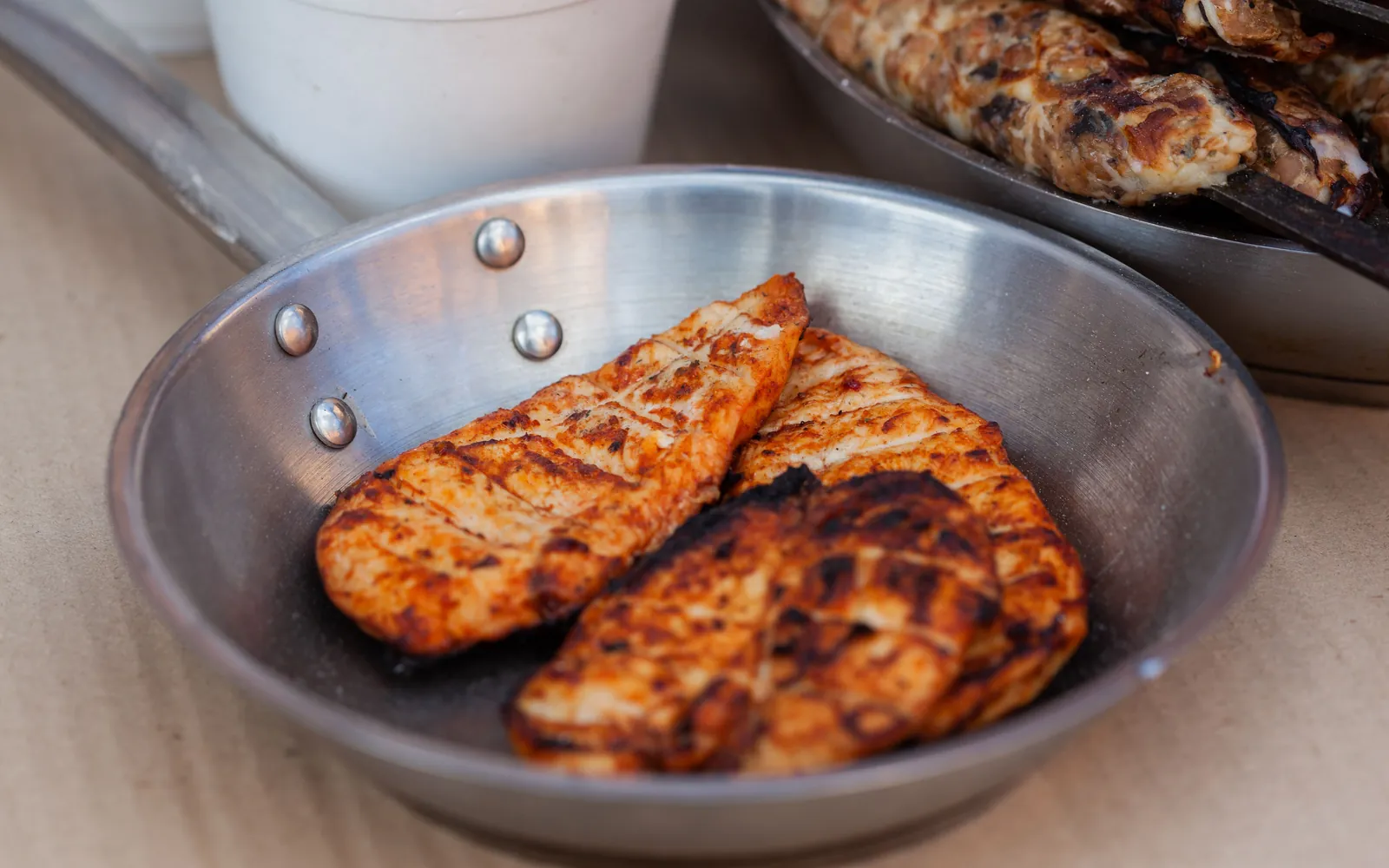
| Chicken breast, cooked | 4 oz (113 g) | About 35 g |
| Cottage cheese, low-fat | 1 cup (226 g) | About 25 g |
| Greek yogurt, plain nonfat | 1 cup (227 g) | About 23 g |
| Salmon, cooked | 3 oz (85 g) | About 22 g |
| Lean ground beef, cooked | 3 oz (85 g) | About 22 g |
| Canned tuna, drained | 3 oz (85 g) | About 20 g |
| Lentils, cooked | 1 cup (198 g) | About 18 g |
| Firm tofu | 3.5 oz (100 g) | About 15 g |
| Eggs | 2 large | About 12 g |
| Milk | 1 cup (240 ml) | About 8 g |
| Whey protein powder | 1 scoop | About 20 to 25 g |
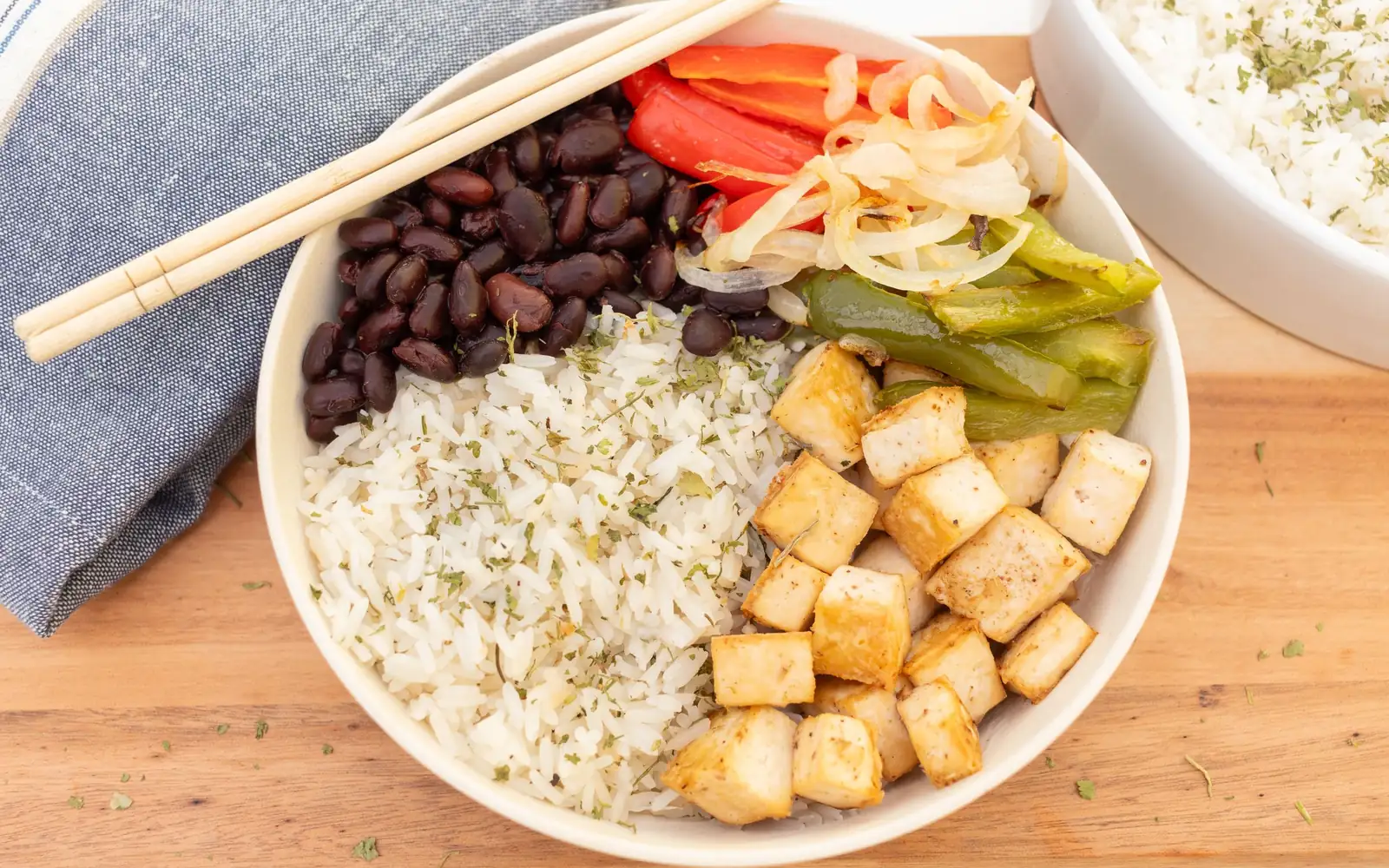
Beans, lentils, tofu and tempeh can get you there too. They usually come with more carbs or fat for each gram of protein, so a plant-based day takes a little more planning.
What a high-protein day can look like
Spread over four meals, 140 grams is easier to reach than it sounds. This is one example for a 176 lb (80 kg) person:
| Meal | Food | Protein | Running total |
|---|---|---|---|
| Breakfast | 1 cup (227 g) Greek yogurt with berries | 23 g | 23 g |
| Lunch | Wrap with 4 oz (113 g) chicken | 40 g | 63 g |
| Snack | Protein shake made with milk | 33 g | 96 g |
| Dinner | 6 oz (170 g) salmon with rice and vegetables | 44 g | 140 g |


Common questions
How much protein a day is too much?
For healthy adults, researchers haven't found a clear upper limit. In a small one-year study, men who lifted and ate about 1.5 grams per pound a day (3.3 grams per kilogram) showed no harm to their kidneys, liver or blood fats. If you have kidney disease or another health condition, go with the amount your doctor recommends.
Do I need protein right after a workout?
Not right away. Your daily total matters most, and a meal with protein within a few hours before or after training has you covered. A shake right after your workout is fine if it's convenient, but you can skip it.
Are protein shakes worth it?
They're a convenient way to reach your target, especially on busy days. They don't do anything that food can't, so if you already hit your number from meals, you can leave them out.
Does protein help you lose weight?
Protein doesn't burn fat on its own, but it helps in two ways. It keeps you full, so it's easier to eat less, and it helps you keep your muscle while you lose fat. For more on how protein fits with carbs and fat, see What are macros?
Can I get enough protein without meat?
Yes. Eggs, dairy, tofu, tempeh, seitan, beans and lentils all add up, and a scoop of protein powder can fill any gap at the end of the day.
Sources
- National Academies of Sciences, Engineering, and Medicine. Dietary Reference Intakes for Energy, Carbohydrate, Fiber, Fat, Fatty Acids, Cholesterol, Protein, and Amino Acids (2005).
- Jäger R. et al. International Society of Sports Nutrition Position Stand: protein and exercise. Journal of the International Society of Sports Nutrition (2017).
- Morton R.W. et al. A systematic review, meta-analysis and meta-regression of the effect of protein supplementation on resistance training-induced gains in muscle mass and strength. British Journal of Sports Medicine (2018).
- Schoenfeld B.J. and Aragon A.A. How much protein can the body use in a single meal for muscle-building? Implications for daily protein distribution. Journal of the International Society of Sports Nutrition (2018).
- Bauer J. et al. Evidence-based recommendations for optimal dietary protein intake in older people: a position paper from the PROT-AGE Study Group. Journal of the American Medical Directors Association (2013).
- Trommelen J. et al. The anabolic response to protein ingestion during recovery from exercise has no upper limit in magnitude and duration in vivo in humans. Cell Reports Medicine (2023).
- Antonio J. et al. A high protein diet has no harmful effects: a one-year crossover study in resistance-trained males. Journal of Nutrition and Metabolism (2016).
- U.S. Department of Agriculture. FoodData Central.