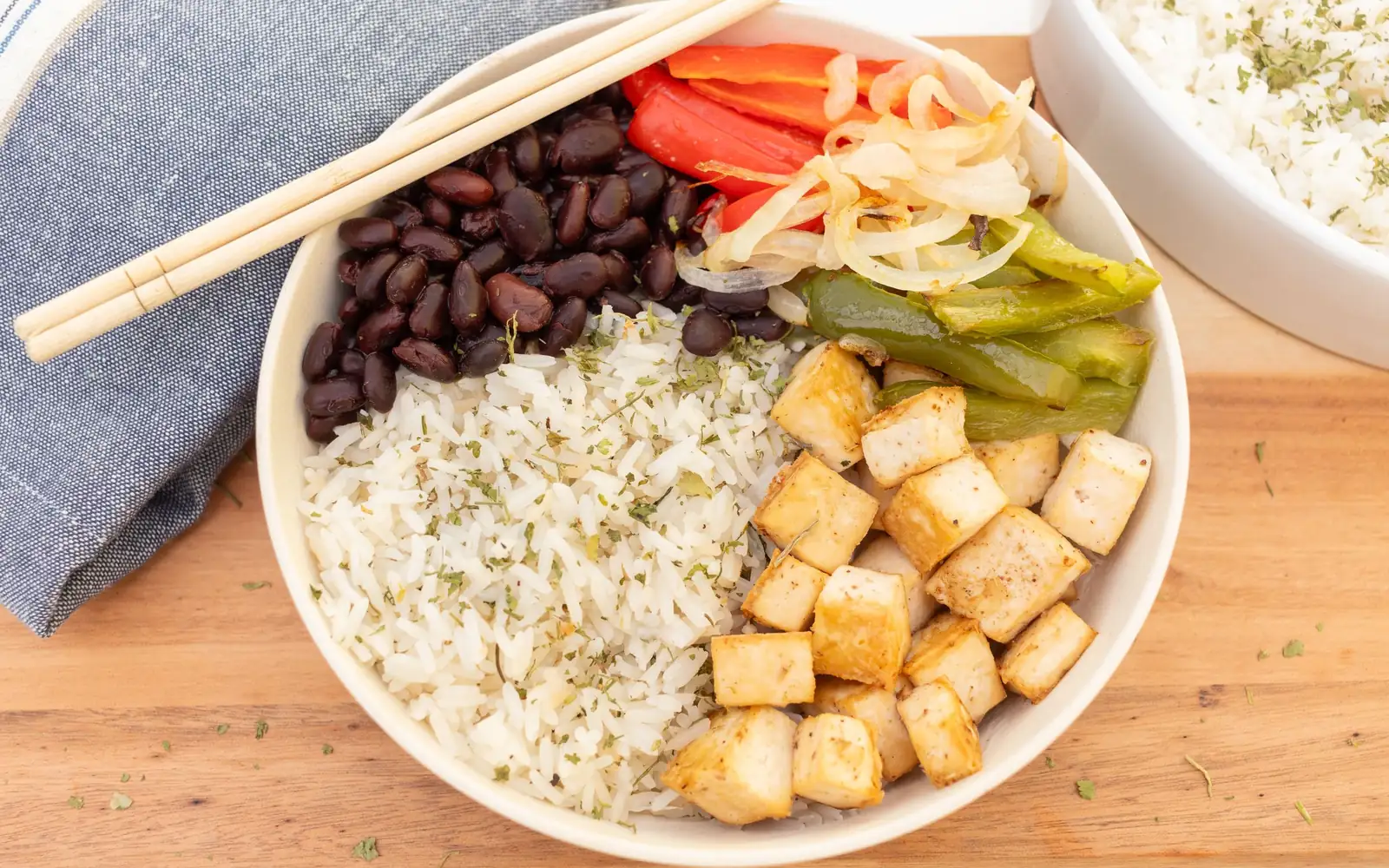
The best vegan protein sources are soy foods, like tofu, tempeh, edamame and soybeans, followed by lentils, split peas and beans. A cup of firm tofu has about 44 grams of protein, and a cup of cooked lentils has about 18. With a few of these each day, you can reach the same protein targets on a vegan diet as on any other.
Plant proteins usually come with more carbs or fat than meat or dairy, so it's worth knowing which ones give you the most protein for their calories. All the numbers below come from the USDA's FoodData Central database.
The top vegan protein sources
| Food | Serving | Protein | Calories | Protein per 100 calories |
|---|---|---|---|---|
| Firm tofu | 1 cup (252 g) | 43.5 g | 363 | 12.0 g |
| Tempeh | 1 cup (166 g) | 33.7 g | 319 | 10.6 g |
| Soybeans, cooked | 1 cup (172 g) | 31.3 g | 296 | 10.6 g |
| Edamame, cooked | 1 cup (155 g) | 18.5 g | 188 | 9.8 g |
| Lentils, cooked | 1 cup (198 g) | 17.9 g | 230 | 7.8 g |
| Split peas, cooked | 1 cup (196 g) | 16.3 g | 231 | 7.1 g |
| Black beans, cooked | 1 cup (172 g) | 15.2 g | 227 | 6.7 g |
| Chickpeas, cooked | 1 cup (164 g) | 14.5 g | 269 | 5.4 g |
| Hemp seeds, hulled | 3 tbsp (30 g) | 9.5 g | 166 | 5.7 g |
| Pumpkin seeds | 1 oz (28 g) | 8.6 g | 158 | 5.4 g |
| Quinoa, cooked | 1 cup (185 g) | 8.1 g | 222 | 3.6 g |
| Soy milk | 1 cup (240 ml) | 6.3 g | 104 | 6.1 g |
Our Vegan Protein list has 26 foods in all, with carbs, fat and fiber for each, and you can sort it by any column.
How to read the list
Soy foods stand out. Tofu, tempeh, soybeans and edamame give you the most protein for their calories, around 10 to 12 grams per 100 calories. That's more than eggs and close to chicken thighs.
Lentils, peas and beans are the next tier. They have about 15 to 18 grams of protein a cup, plus a lot of fiber. They also bring 40 or so grams of carbs, so a bowl of lentils counts as both your protein and your starch.
Nuts and seeds are mostly fat. Hemp and pumpkin seeds are among the better ones for protein, but most of their calories come from fat. They work best as an extra on top of a meal that already has a main protein.
Grains add up. Quinoa gets a lot of attention, but a cup has about 8 grams of protein. Oats, whole-wheat pasta and bread are similar. Across a day, they can add 20 or 30 grams.
Is plant protein as good for building muscle?
Yes, if you eat enough of it. A 2021 study in Sports Medicine had young men follow either a vegan or an omnivorous diet for 12 weeks while lifting twice a week. Both groups ate about the same high amount of protein, with the vegans taking soy protein and the omnivores taking whey. Muscle size and strength went up the same in both groups.
A 2018 meta-analysis found something similar for protein supplements. Across nine studies, soy protein and whey led to about the same gains in strength and lean mass when paired with resistance training.
Your body digests plant proteins a little less completely, and many are lower in one or two amino acids, like lysine in grains or methionine in beans. Eating a mix of plant proteins through the day covers that. Some researchers suggest vegans aim toward the higher end of their protein range to make up for the digestion difference.
How much protein do you need on a vegan diet?
The same targets apply. For people who lift, the International Society of Sports Nutrition suggests about 0.64 to 0.91 grams per pound of body weight a day (1.4 to 2.0 grams per kilogram). At 150 lb (68 kg), that's roughly 95 to 135 grams a day. Our free Protein Calculator works out your own range, and How much protein do I need a day? covers the research behind it.
What a high-protein vegan day can look like
Our vegan meal plan example reaches about 118 grams of protein at around 1,950 calories. It gets there with soy milk, lentils, edamame and tofu spread across the day, and about 60 grams of fiber comes along with it. A simple version of the same idea:
| Meal | Example | Protein |
|---|---|---|
| Breakfast | Oats made with soy milk, topped with hemp seeds | About 20 g |
| Lunch | Lentil and quinoa bowl with vegetables | About 25 g |
| Snack | A cup of edamame | About 18 g |
| Dinner | Tofu stir-fry with rice | About 35 g |
| Evening snack | Soy milk and a handful of pumpkin seeds | About 15 g |
That adds up to around 110 grams. If you eat dairy and eggs, our vegetarian meal plan example reaches about 126 grams with Greek yogurt and cottage cheese in the mix. Both are examples, so swap foods to suit what you like.
Tips for getting more vegan protein
- Build each meal around a protein. Start with tofu, tempeh, lentils or beans, then add the grains and vegetables.
- Pick soy milk over other plant milks. Almond and oat milk usually have 1 to 3 grams of protein a cup, compared with about 6 in soy milk.
- Press your tofu. Squeezing out the water for 15 minutes before cooking makes it firmer and lets it brown, which makes it a lot easier to enjoy often.
- Cook beans in batches. A pot of lentils or a few cans of beans in the fridge makes it easy to add protein to any meal.
- Use a protein powder if it helps. Soy and pea protein powders are a quick way to add 20 grams or so when food alone falls short.
Vegans also get no vitamin B12 from food unless it's fortified, so a B12 supplement or fortified foods like some plant milks and nutritional yeast are a standard part of a vegan diet.


Common questions
What's the highest-protein vegan food?
Among whole foods, firm tofu, tempeh and soybeans have the most, at about 31 to 44 grams a cup. Seitan, made from wheat gluten, is even higher per serving, though it isn't an option if you avoid gluten.
Is it necessary to combine proteins at every meal?
No. Your body pools the amino acids from what you eat over the day, so eating a variety of plant proteins across your meals is enough. Rice and beans at the same meal is fine, but it isn't required.
Can you build muscle on a vegan diet?
Yes. The studies above found the same gains in muscle and strength on vegan and omnivorous diets when researchers matched protein intake.
Are beans a protein or a carb?
Both. A cup of black beans has about 15 grams of protein and 41 grams of carbs, including 15 grams of fiber. When you track macros, they count toward both.
Sources
- Hevia-Larraín V. et al. High-protein plant-based diet versus a protein-matched omnivorous diet to support resistance training adaptations: a comparison between habitual vegans and omnivores. Sports Medicine (2021).
- Messina M. et al. No difference between the effects of supplementing with soy protein versus animal protein on gains in muscle mass and strength in response to resistance exercise. International Journal of Sport Nutrition and Exercise Metabolism (2018).
- Melina V. et al. Position of the Academy of Nutrition and Dietetics: vegetarian diets. Journal of the Academy of Nutrition and Dietetics (2016).
- Jäger R. et al. International Society of Sports Nutrition Position Stand: protein and exercise. Journal of the International Society of Sports Nutrition (2017).
- U.S. Department of Agriculture. FoodData Central.