Most adults need between 22 and 34 grams of fiber a day, depending on your age and sex, but the average American eats closer to 17. Getting more fiber can help you stay full on fewer calories, and people who eat the most of it have lower rates of heart disease, type 2 diabetes and colon cancer.
How much fiber you need a day
The 2020 to 2025 Dietary Guidelines for Americans set these daily targets for adults:
| Age | Women | Men |
|---|---|---|
| 19 to 30 | 28 g | 34 g |
| 31 to 50 | 25 g | 31 g |
| 51 and older | 22 g | 28 g |
The guidelines set these at about 14 grams per 1,000 calories, so if you eat a lot, you may need a bit more. They picked those amounts because they lowered heart disease risk in studies. The newer 2025 to 2030 guidelines don't give a gram number, but they tell you to pick fiber-rich whole grains.
On a nutrition label, the Daily Value for fiber is 28 grams, so 7 grams in a serving is 25% of your day.
How much fiber most people actually eat
Not nearly enough. In the most recent national food survey, adults averaged about 16.6 grams a day: about 18 for men and 15 for women. The Dietary Guidelines say more than 90% of women and 97% of men don't hit their target.
So if you're like most people, you're about 10 to 15 grams short. That's roughly one cup of beans, or a bowl of oatmeal with berries.
Why fiber is worth tracking
A 2019 set of reviews in The Lancet pulled together 185 long-term studies and 58 trials. People who ate the most fiber had a 15% to 30% lower risk of dying early, and of heart disease, stroke, type 2 diabetes and colon cancer, than people who ate the least. The biggest drop showed up at about 25 to 29 grams a day, and more may help further.
Most of that data comes from long-term observational studies, which can show a link but can't prove fiber caused it, and the authors rated the evidence as moderate.
Does fiber help you lose weight?
It seems to help you stick to your diet. In a 2019 analysis of a weight loss trial, 345 adults ate about 750 calories a day under their needs for 6 months and lost about 16 lb (7.3 kg) on average. Out of everything researchers looked at in their diets, fiber intake was the strongest predictor of how much weight people lost, and people who ate more fiber stuck to their calorie targets better.
That study shows a link, not cause and effect, and it relied on people writing down what they ate. High-fiber foods like beans, vegetables, fruit and oats tend to take up a lot of room in your stomach for the calories, so you can eat a decent amount without blowing your budget. You still need a calorie deficit to lose weight, and fiber can make it easier to live with.
What 30 grams of fiber looks like
This example day gets you there, using USDA numbers. Swap in foods you like from our high-fiber foods list:
| Meal | Food | Fiber |
|---|---|---|
| Breakfast | ½ cup dry oats (41 g) with 1 cup raspberries (123 g) | 12 g |
| Lunch | Sandwich on 2 slices whole-wheat bread (64 g), plus a medium apple | 8 g |
| Dinner | ½ cup black beans (86 g) and 1 cup cooked broccoli (156 g) | 13 g |
| Total | 33 g |
Two or three fiber-rich foods per meal add up fast, and beans give you the most fiber for the fewest servings. If you don't like beans, a cup of cooked lentils or split peas has about the same fiber, and a pear or another cup of raspberries adds 5 to 8 grams.
Go up a few grams at a time instead of doubling your fiber overnight. Jumping from 15 to 35 grams in a day is a good way to end up bloated and gassy. The National Institute of Diabetes and Digestive and Kidney Diseases suggests adding fiber a little at a time and drinking water and other liquids along with it.
Why am I always hungry?
Low fiber can be part of it. These are other common causes that research backs up:
- Not enough protein. A 2020 meta-analysis of 49 papers found that higher-protein meals cut hunger and made people feel fuller in the hours after eating. The effect over months was less clear. See how much protein you need a day.
- A lot of ultra-processed food. In a 2019 trial, 20 adults ate as much as they wanted of either an ultra-processed diet or an unprocessed one for 2 weeks each. On the ultra-processed diet, they took in about 500 extra calories a day and gained weight, even though both diets had about the same fiber.
- Short sleep. In a 2022 trial of 80 adults who slept less than 6.5 hours a night, the group that got about an hour more sleep ate about 270 fewer calories a day.
- Drinking your calories. A 2020 meta-analysis found that solid foods cut hunger more than liquids did. Smoothies and shakes go down fast, and they tend not to keep you full as long as the same food eaten whole.
- Losing weight. Your body pushes back as you lose. In a 2023 study, adults who lost about 31 lb (14 kg) in 8 weeks got hungrier as they went, and the people whose resting calorie burn dropped the most had the biggest jump in hunger. They still lost the weight, so the hunger doesn't mean your diet stopped working.
If you're hungry all the time along with being very thirsty, peeing a lot or losing weight without trying, talk to your doctor.
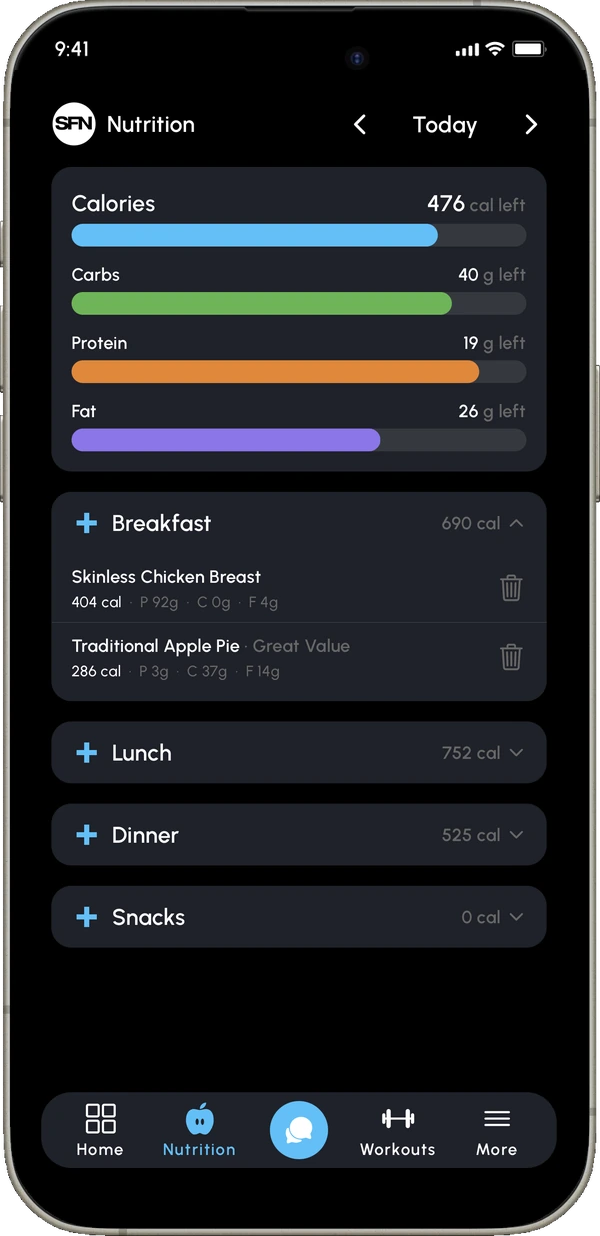
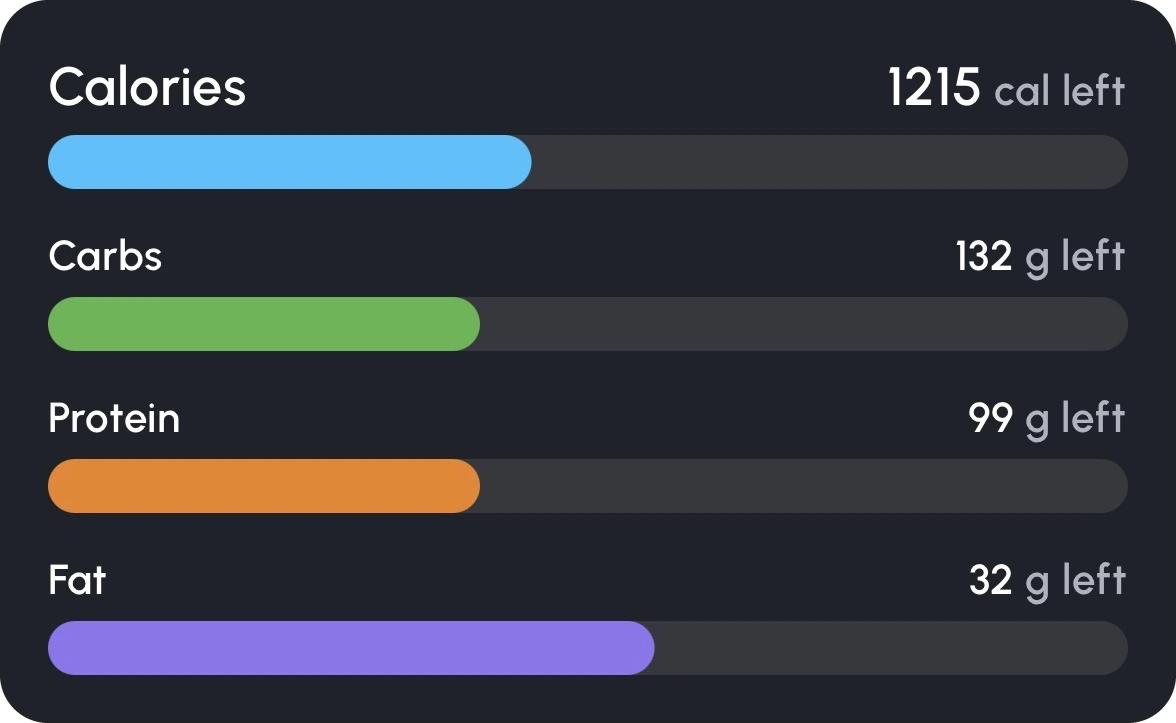
Fiber counts toward your carbs on a nutrition label, so logging your meals shows how those foods fit into your day.


Common questions
Can you eat too much fiber?
You can eat more than your stomach likes, especially if you add it fast. Gas, bloating and cramps are the usual signs. For most people eating whole foods, that's the main downside, and it settles as your body gets used to it.
Do fiber supplements count?
Yes, the fiber counts toward your total. Food gives you more than just fiber, though, like vitamins, minerals and protein in the case of beans, so try to get most of it from food and use a supplement to fill the gap if you need to.
Does fiber help with constipation?
For a lot of people, yes. The National Institute of Diabetes and Digestive and Kidney Diseases suggests eating more fiber to help with constipation, adding it a little at a time and drinking water and other liquids so the fiber can do its job. If it doesn't get better, check with your doctor.
How do I know how much fiber I'm eating?
Check the nutrition labels on what you eat for a few days and add up the dietary fiber line. For foods without a label, like fruit, vegetables and beans, our high-fiber foods list has the grams for common servings.
Sources
- U.S. Department of Agriculture and U.S. Department of Health and Human Services. Dietary Guidelines for Americans, 2020-2025.
- U.S. Department of Agriculture and U.S. Department of Health and Human Services. Dietary Guidelines for Americans, 2025-2030.
- U.S. Food and Drug Administration. Daily Value on the Nutrition and Supplement Facts Labels.
- U.S. Department of Agriculture, Agricultural Research Service. What We Eat in America, NHANES 2017-March 2020.
- Reynolds A. et al. Carbohydrate quality and human health: a series of systematic reviews and meta-analyses. The Lancet (2019).
- Miketinas D.C. et al. Fiber Intake Predicts Weight Loss and Dietary Adherence in Adults Consuming Calorie-Restricted Diets: The POUNDS Lost (Preventing Overweight Using Novel Dietary Strategies) Study. The Journal of Nutrition (2019).
- National Institute of Diabetes and Digestive and Kidney Diseases. Eating, Diet, & Nutrition for Constipation.
- Kohanmoo A. et al. Effect of short- and long-term protein consumption on appetite and appetite-regulating gastrointestinal hormones, a systematic review and meta-analysis of randomized controlled trials. Physiology & Behavior (2020).
- Hall K.D. et al. Ultra-Processed Diets Cause Excess Calorie Intake and Weight Gain: An Inpatient Randomized Controlled Trial of Ad Libitum Food Intake. Cell Metabolism (2019). (Disclosure: one author has advised a food ingredient company and works in a group funded by food and nutrition companies.)
- Tasali E. et al. Effect of Sleep Extension on Objectively Assessed Energy Intake Among Adults With Overweight in Real-life Settings: A Randomized Clinical Trial. JAMA Internal Medicine (2022).
- Stribiţcaia E. et al. Food texture influences on satiety: systematic review and meta-analysis. Scientific Reports (2020).
- Martins C. et al. Metabolic adaptation is associated with a greater increase in appetite following weight loss: a longitudinal study. The American Journal of Clinical Nutrition (2023).