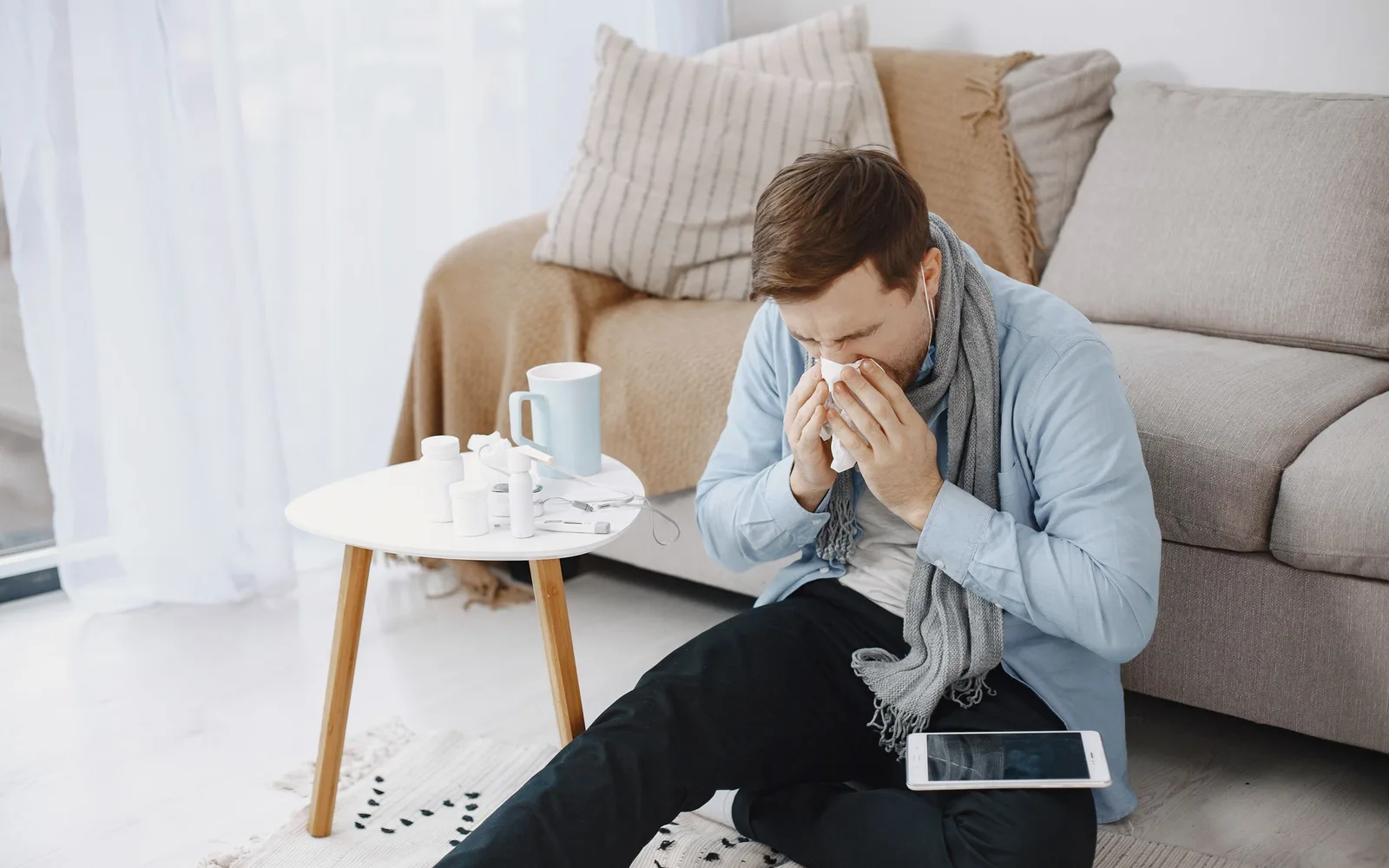
If you've got a head cold, like a runny or stuffy nose or a mild sore throat, you can usually still get a light workout in. If you've got a fever, body aches, a cough in your chest or a stomach bug, skip the gym until you're better. Most of the advice here comes from what sports doctors have seen, since researchers haven't tested workouts during real colds.
The neck check: a quick way to decide
Sports doctors use a rule of thumb called the neck check. It comes from their experience rather than studies, and a 2024 expert review called it unscientific but still partly useful. It's a good place to start:
| Where your symptoms are | For example | What to do |
|---|---|---|
| Above the neck | Runny or stuffy nose, sneezing, mild sore throat | Try 10 to 15 minutes of light exercise. If you feel the same or better, you can keep going at an easy pace. |
| Below the neck | Fever, body aches, a cough in your chest, upset stomach | Rest until those symptoms are gone. |
| Warning signs | Chest pain, shortness of breath, a racing or pounding heart, feeling faint | Stop and see a doctor before you train again. |
Can you work out with a cold?
Usually, yes, as long as your symptoms stay above the neck. A 2019 clinical review on illness in athletes says it's often fine to train with a mild cold, as long as you go by how you feel. Start with 10 to 15 minutes of something easy, like a walk, a slow bike ride or a few light sets, and only build up if you don't feel any worse.
No one has studied people working out during a real cold, which the 2024 review pointed out. It also found no evidence that working out with a cold causes serious harm.
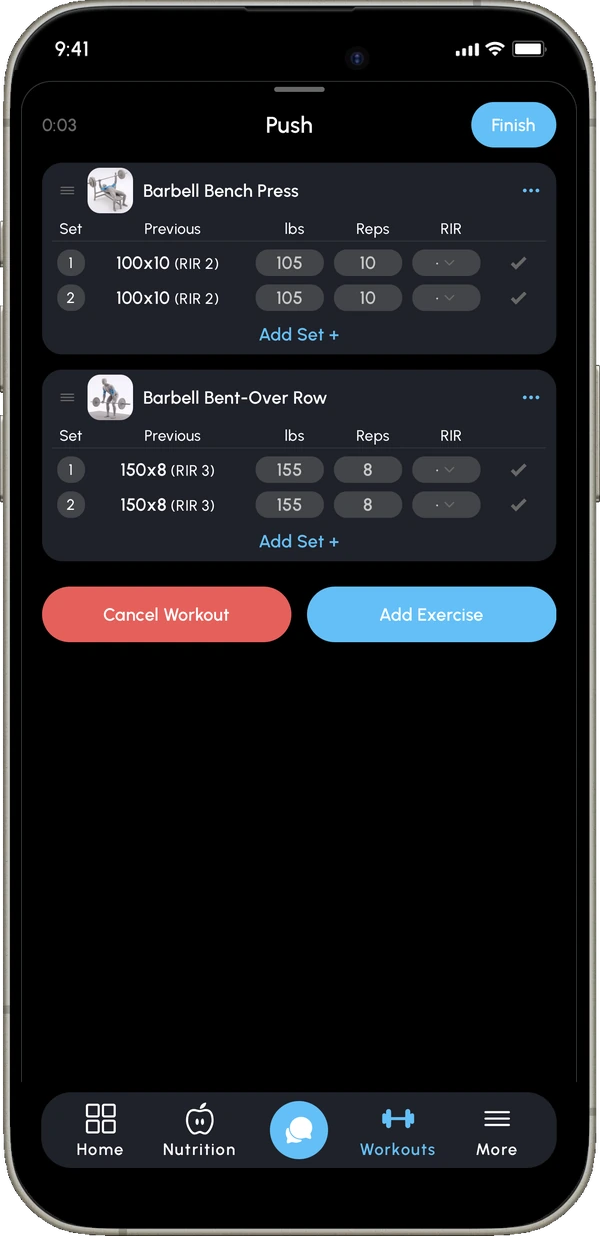
Keep the workout lighter than normal. Use less weight, do fewer sets and stop a few reps short of failure on every set. This isn't the day to try for a new max. If you're not sure how many reps you have left, see RIR (reps in reserve).
Should you work out with a fever?
No. A fever is the clearest sign to rest, and the 2019 review lists it as a reason not to train at all. When you have a fever, your body has a harder time controlling its temperature, you lose more fluid, and your heart pumps less blood with each beat. So the same workout feels a lot harder.
The bigger worry is your heart. Some viruses can cause myocarditis, which is swelling of the heart muscle. A 2021 review on myocarditis in athletes listed training through an infection, or coming back too soon, as a risk factor. The early signs are easy to miss, like feeling worn out, sore muscles and a heart rate that stays higher than usual even at rest.
Serious problems are rare. The 2024 review put sudden death from myocarditis during sport at about 1 in 2 million people a year. It's still easy to avoid, though. Wait until you've gone 24 hours without a fever, without taking anything to bring it down, before you train again.
Treat the flu and COVID like below-the-neck illnesses, even if your head feels the worst. The 2024 review says to stop training with either one.
Does working out weaken your immune system?
Not the way people used to think. A 2018 review found little good evidence that a hard workout makes you more likely to get sick. For an hour or two after exercise, you have fewer immune cells in your blood, but that's because they move out into your tissues to look for germs.
Working out regularly seems to help. A 2021 meta-analysis found that people who were more active had about a 31% lower risk of catching infections like colds and the flu, and about a 37% lower risk of dying from one. Those numbers come from studies that followed people over time, so they show a link, not proof. The same analysis found that people on exercise programs made slightly more antibodies after a vaccine.
A 2019 review described the pattern like this: regular, moderate workouts lower how often you get sick, while long stretches of very hard, very high-volume training may raise it. If you lift a few days a week, you're nowhere near that second group.
What about a stomach bug?
Skip training until it's over. Vomiting and diarrhea make you lose water fast, and being dehydrated makes any workout harder. The 2019 review suggests waiting until you have no fever, you're drinking normally, you're back to eating solid food and your stomach has settled. After that, ease back in the same way you would after a cold.
That advice comes from doctors' experience, since we couldn't find recent studies on working out after a stomach bug. Our post on how much water to drink a day explains why you need more when you're sick.
How to come back after being sick
Once your symptoms are gone, ease back in instead of jumping straight into your full program:
- Start with a short, easy session. 15 to 20 minutes of walking or light lifting shows you how your body is handling it.
- Build up a little at a time. The 2019 review suggests adding about 10% at a time: first how often you train, then how long, then how hard.
- Go lighter on your lifts at first. Use less weight for your first session or two back, then work your way up to where you were.
- Back off if your symptoms come back. If you feel worse, take another rest day and restart at an easier level.
After COVID, sports doctors have used a slower, step-by-step return. A 2020 guide for athletes called for 10 days of rest and 7 days without symptoms before starting, and some athletes took more than 3 weeks to get back to full training.
How much progress do you lose while you're sick?
Usually less than you'd think. In a 2022 review of illness in athletes, symptoms lasted about 7 days on average, and most illnesses didn't cost them any training days at all.
When you do take time off, a short break costs you a little strength that comes back fast. In a small 2025 study, elite hockey players who took 2 weeks off lost about 3.6% of their muscle mass, and everything was back within a week of training again. A 2023 study of sprinters found that some strength measures dropped 6% to 15% after 2 weeks off, while others barely changed. Both studies were small and done in elite athletes, so your numbers may differ. For longer breaks, see how long it takes to lose muscle.
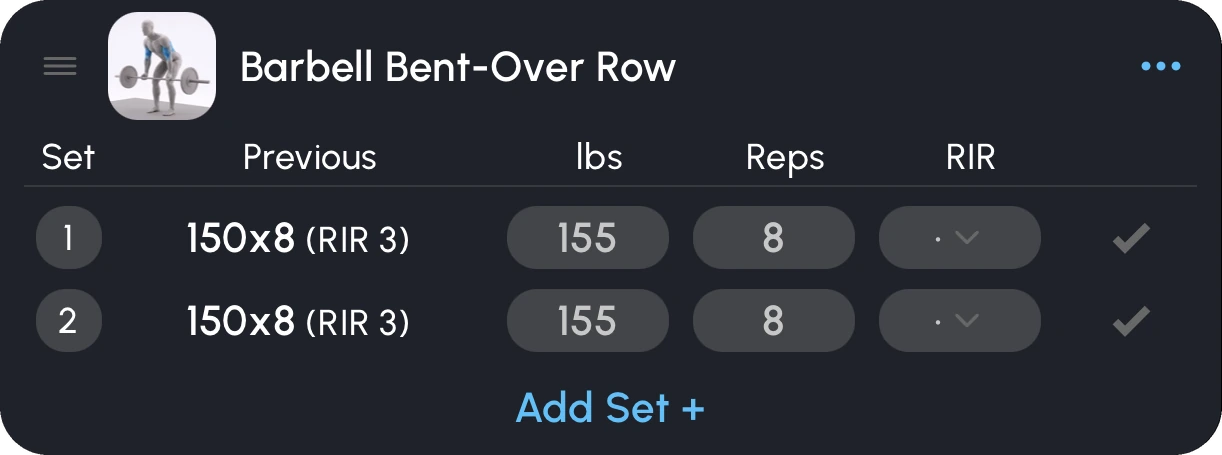
When you're back, your previous weight and reps give you a starting point. Pick something a little lighter and build back up from there.


Common questions
Can you sweat out a cold?
There's no good evidence that sweating gets rid of a cold any faster. If you have a fever, a hard workout is the one thing you should skip.
Should I go to the gym with a cold?
If your symptoms are above the neck and you feel up to it, a light workout is usually fine. Colds spread, though, and the gym is full of shared equipment. If you're sneezing or coughing a lot, a home workout or a walk outside keeps your germs away from everyone else.
How long after the flu can I work out?
Wait until you've gone at least 24 hours without a fever and without fever medicine, and your body aches and cough have mostly cleared up. Then start light and build up over several days. If you get chest pain, shortness of breath or a racing heart, stop and see a doctor.
Will I lose muscle if I miss a week?
Not much, if any. In the short studies above, athletes lost a little after 2 weeks off and got it back within about a week of training. If you're trying to fit missed sessions back in, see how many days a week to work out.
Sources
- Ruuskanen O. et al. Sport and exercise during viral acute respiratory illness: Time to revisit. Journal of Sport and Health Science (2024).
- Jaworski C.A., Rygiel V. Acute Illness in the Athlete. Clinics in Sports Medicine (2019).
- Halle M. et al. Myocarditis in athletes: A clinical perspective. European Journal of Preventive Cardiology (2021).
- Campbell J.P., Turner J.E. Debunking the Myth of Exercise-Induced Immune Suppression: Redefining the Impact of Exercise on Immunological Health Across the Lifespan. Frontiers in Immunology (2018).
- Chastin S.F.M. et al. Effects of Regular Physical Activity on the Immune System, Vaccination and Risk of Community-Acquired Infectious Disease in the General Population: Systematic Review and Meta-Analysis. Sports Medicine (2021).
- Nieman D.C., Wentz L.M. The compelling link between physical activity and the body's defense system. Journal of Sport and Health Science (2019).
- Elliott N. et al. Infographic. Graduated return to play guidance following COVID-19 infection. British Journal of Sports Medicine (2020).
- Snyders C. et al. Acute respiratory illness and return to sport: a systematic review and meta-analysis by a subgroup of the IOC consensus on 'acute respiratory illness in the athlete'. British Journal of Sports Medicine (2022).
- Nishiumi D. et al. Effects of a 7-day step taper, training cessation, and retraining on lower body physical and morphological aspects in elite female ice hockey players. Frontiers in Sports and Active Living (2025).
- Yamashita D. et al. Effect of two weeks of training cessation on concentric and eccentric knee muscle strength in highly trained sprinters. PLoS One (2023).