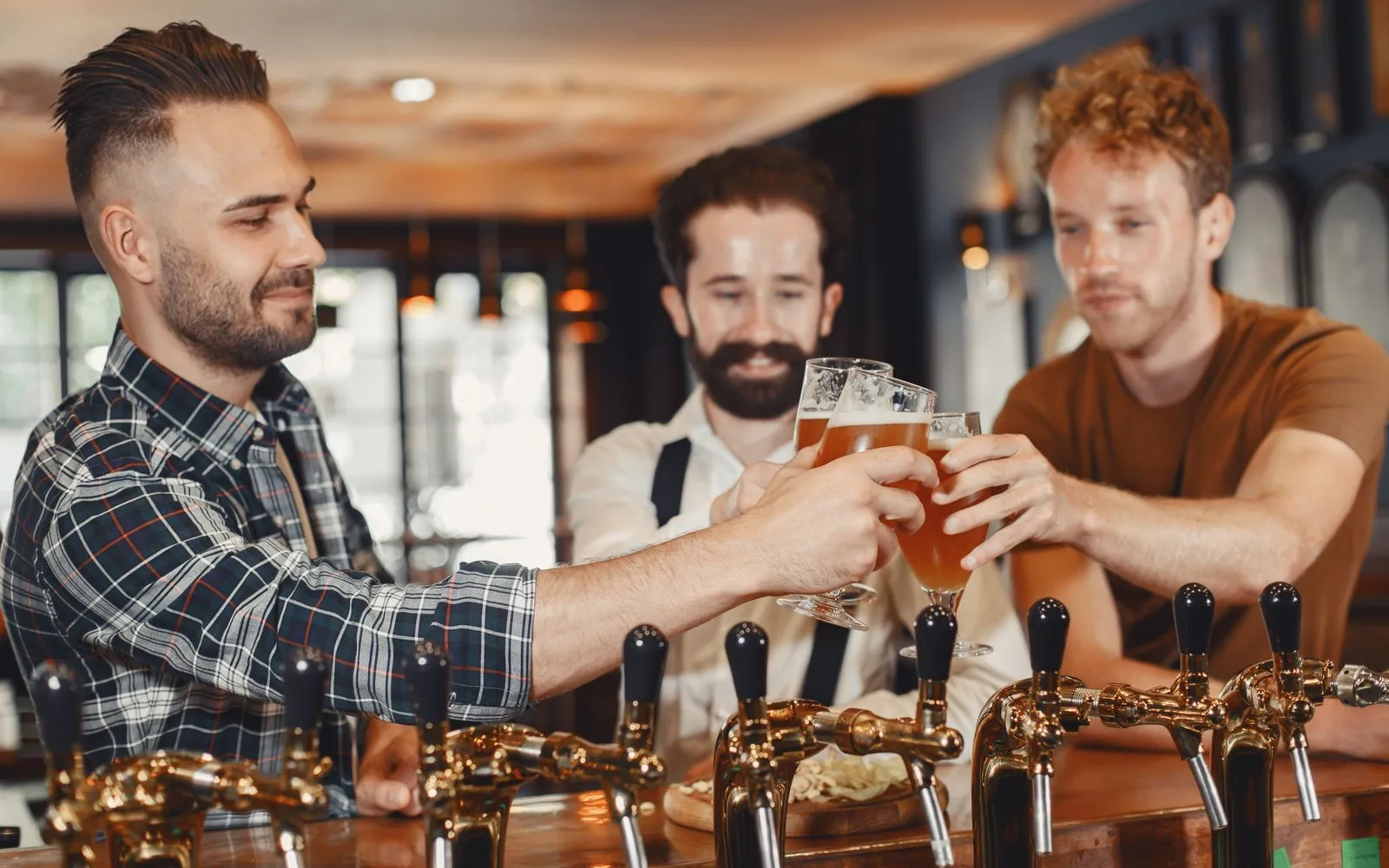
A drink or two now and then won't undo your training. Several drinks in one sitting can slow you down: in lab studies, heavy drinking after a workout cut how much muscle protein the body built, and every drink adds calories that eat into a fat-loss deficit. The chart below covers common drinks, and the sections after it cover muscle, testosterone, fat loss and sleep.
Calories in alcoholic drinks
Every drink below has about one standard drink's worth of alcohol, which is 14 grams in the U.S. Most of the calories come from the alcohol itself, and mixers and sweet cocktails add carbs on top. We took the numbers from USDA FoodData Central:
| Drink | Serving | Calories | Carbs | Alcohol |
|---|---|---|---|---|
| Vodka, gin, rum or whiskey (80 proof) | 1.5 fl oz (44 ml) | 97 | 0 g | 14 g |
| Light beer | 12 fl oz (355 ml) | 103 | 6 g | 11 g |
| White wine | 5 fl oz (148 ml) | 121 | 4 g | 15 g |
| Red wine | 5 fl oz (148 ml) | 125 | 4 g | 16 g |
| Rosé wine | 5 fl oz (148 ml) | 126 | 6 g | 15 g |
| Regular beer | 12 fl oz (355 ml) | 153 | 13 g | 14 g |
| Whiskey sour | 3.5 fl oz (104 ml) | 158 | 14 g | 15 g |
| Rum and cola | 1.5 fl oz rum with 8 fl oz cola | 200 | 25 g | 14 g |
| Hard lemonade | 11.2 fl oz (331 ml) | 228 | 34 g | 13 g |
| Piña colada | 4.5 fl oz (133 ml) | 245 | 32 g | 14 g |
Alcohol has 7 calories per gram, so the 14 grams in one standard drink add about 100 calories before any mixer. Our post on what macros are explains how those calories fit into your day. Drinks also tend to be bigger than the serving sizes above. A heavy pour of wine or a pint of craft beer can count as two drinks.
Does alcohol affect muscle growth?
It can, but the research mostly looks at heavy drinking. A 2019 review pulled together 12 studies that had people drink after lifting or playing a sport. The doses ranged from about 0.6 to 1.5 grams of alcohol per kilogram of body weight, which works out to roughly 3 to 9 standard drinks for a 180 lb (82 kg) man.
- Next-day performance: strength, power, endurance and soreness over the next day or two looked about the same with or without alcohol.
- Muscle building and hormones: after drinking, muscle protein building was lower, testosterone tended to drop, and cortisol, a stress hormone, tended to rise.
The biggest effect came from one small study in the review. After a hard workout, 8 men drank 1.5 grams of alcohol per kilogram of body weight over 3 hours, close to 9 drinks for a 180 lb man. Muscle protein building over the next 8 hours was 24% lower than without alcohol, even when they had protein with it, and 38% lower when they had carbs instead.
A 2020 study found the same for performance. Ten men who lifted drank the equivalent of about 5 to 6 drinks for a typical lifter after a heavy squat workout, and their jump power and soreness recovered just as well as when they skipped the alcohol.
So one night of drinking probably won't show up in your next workout, but it can slow the muscle-building work that happens afterward. Researchers haven't tested what that adds up to over months of training. A 2023 review of alcohol and muscle found that both single heavy sessions and long-term heavy drinking lower protein building and speed up protein breakdown, though much of that research comes from animal studies and people who drank heavily for years.
Does alcohol lower testosterone?
Moderate drinking doesn't seem to change it much. A 2024 review of 17 studies found no clear difference in testosterone between men who drank and men who didn't. The authors flagged heavy drinking and alcohol use disorder as the problem. The drop seen in the post-workout studies above came after several drinks in one sitting.
Does alcohol stop fat loss?
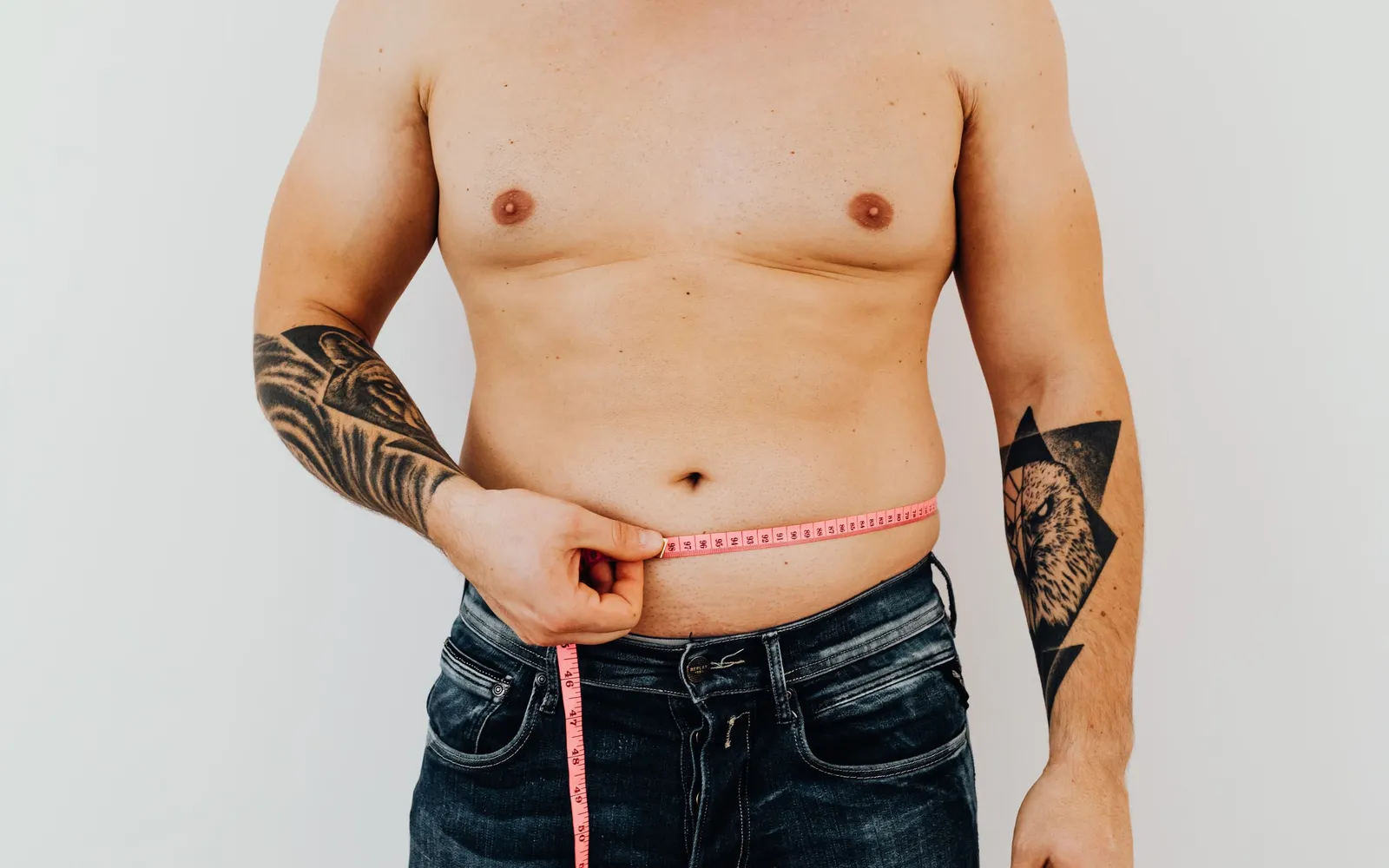
The calories in drinks add up fast. Six regular beers on a Saturday come to about 920 calories. If you're eating 500 calories a day under maintenance, that's nearly two days of your deficit gone in one night.
Drinking can also make you eat more. Our Thanksgiving calorie post covers a 2019 review on this: with a drink at the table, people took in roughly 80 extra calories from food. Late-night food after a few drinks can add a lot more than that.
Over years, studies find only a small link between drinking and body weight. A 2022 review of 36 studies found that men who drank had a slightly higher body mass index, and the gap grew with how much they drank each day. Those studies can't show cause and effect, and plenty of other habits travel with drinking.
How alcohol affects sleep and recovery
Much of your recovery happens while you sleep, and alcohol gets in the way of it. A 2018 study tracked the heart rhythms of 4,098 Finnish workers overnight. On nights they drank, their heart rate variability, a marker of how relaxed and recovered the body is, dropped during the first 3 hours of sleep, and the drop grew with each drink:
- Low intake (under about 1.5 drinks for a 180 lb person): recovery scores fell about 9 percentage points.
- Moderate intake (about 1.5 to 4 drinks): about 24 points.
- High intake (more than about 4 drinks): about 39 points.
Being physically active didn't protect people from the effect.
How to drink and still make progress
The 2025 to 2030 Dietary Guidelines for Americans advise drinking less for better health. If you do drink, these habits keep it from setting you back:
- Log your drinks. They count toward your calories like anything else, and they're easy to forget the next morning.
- Keep it to a drink or two on most nights out. The bigger effects on muscle building and sleep showed up at higher amounts.
- Pick lower-calorie drinks. Spirits with soda water or a diet mixer, light beer and dry wine come in around 100 to 125 calories. Sweet cocktails can run double that.
- Eat a meal with protein first. In the study above, protein didn't cancel out the drop in muscle building, but the drop was smaller.
- Give yourself time after a hard workout. The muscle-building drop showed up when people drank heavily in the hours right after training.

Common questions
Will one beer after a workout hurt my progress?
Not in any way research has measured. The studies that found lower muscle building used several drinks in a few hours. One beer adds about 150 calories, so log it like any other food.
What is the lowest-calorie alcoholic drink?
A shot of 80-proof spirits, about 97 calories, either straight or with soda water or a diet mixer. Light beer is close behind at about 103 calories.
Should I work out with a hangover?
Light training is usually fine if you feel up to it, but save your heavy lifts for another day. A 2018 review found that after heavy drinking, people had slower reactions and worse attention and memory the next day, which matters when you're under a loaded barbell. Drink water and eat before you train.
Sources
- U.S. Department of Agriculture. FoodData Central.
- National Institute on Alcohol Abuse and Alcoholism. What Is A Standard Drink?
- U.S. Department of Agriculture and U.S. Department of Health and Human Services. Dietary Guidelines for Americans, 2025-2030.
- Lakićević N. The Effects of Alcohol Consumption on Recovery Following Resistance Exercise: A Systematic Review. Journal of Functional Morphology and Kinesiology (2019).
- Levitt D.E. et al. Alcohol After Resistance Exercise Does Not Affect Muscle Power Recovery. Journal of Strength and Conditioning Research (2020).
- Simon L. et al. Alcohol and Skeletal Muscle in Health and Disease. Alcohol Research: Current Reviews (2023).
- Moosazadeh M. et al. Association of the Effect of Alcohol Consumption on Luteinizing Hormone (LH), Follicle-Stimulating Hormone (FSH), and Testosterone Hormones in Men: A Systematic Review and Meta-Analysis. International Journal of Preventive Medicine (2024).
- Kwok A. et al. Effect of alcohol consumption on food energy intake: a systematic review and meta-analysis. British Journal of Nutrition (2019).
- Siegmann E.M. et al. Meta-analytic evidence for a sex-diverging association between alcohol use and body mass index. Scientific Reports (2022).
- Pietilä J. et al. Acute Effect of Alcohol Intake on Cardiovascular Autonomic Regulation During the First Hours of Sleep in a Large Real-World Sample of Finnish Employees: Observational Study. JMIR Mental Health (2018). (Disclosure: some authors work for heart-rate monitoring and technology companies.)
- Gunn C. et al. A systematic review of the next-day effects of heavy alcohol consumption on cognitive performance. Addiction (2018).