Most of the time, you're eating more than you think, or your deficit got smaller as you lost weight. Less often, you're holding water that hides the fat you've lost, or you're moving less than when you started. Your metabolism slows down a bit when you diet, but it accounts for a small share of the problem.
First, check that you've stalled
You'll see your weight shift between weigh-ins because of food, salt and water, so you need more than one weigh-in to tell. In a 2020 study that tracked 1,421 people, weight also followed a weekly pattern: highest from Sunday to Tuesday and lowest on Friday. If you weigh in on Monday mornings, you're catching one of your heavier days.
Compare your weekly averages. If your average hasn't moved in about three weeks, you've likely stalled. If it's still dropping a little each week, you're losing fat at a slower pace than you expected.
1. You're eating more than you think
Careful trackers miss food too. Researchers compare what people log with a lab test called doubly labeled water, which measures how many calories you burn. A 2019 review of 59 studies with 6,298 adults found that people logged 11 to 41% less food than they ate. People with more weight to lose missed more.
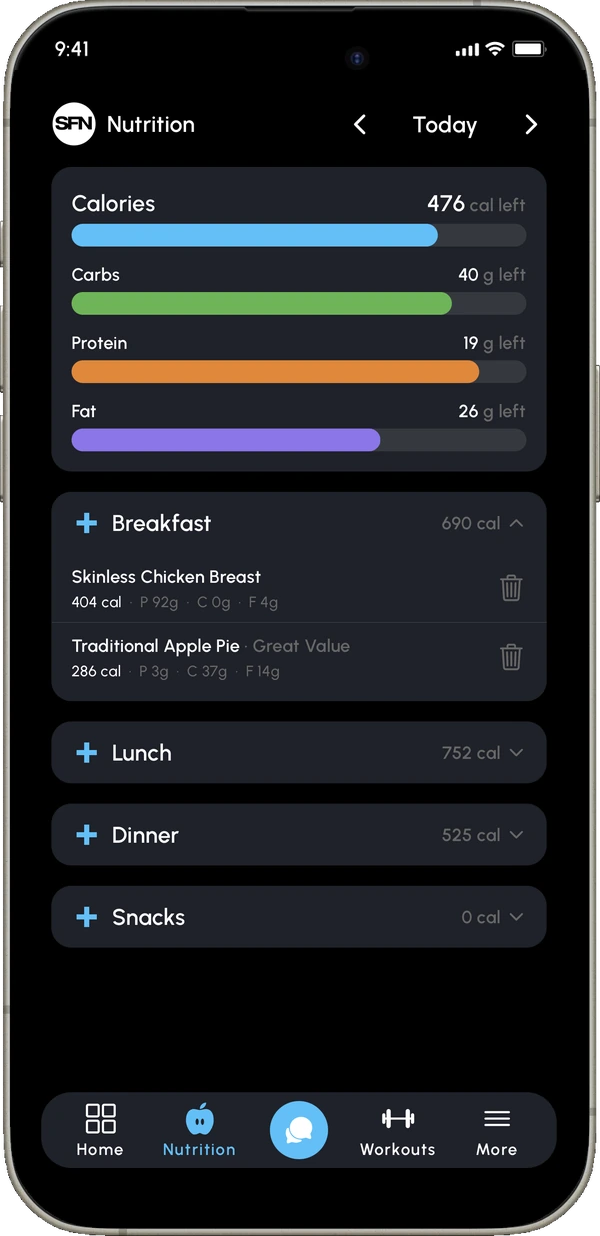
In a 2021 study, young adults wore small cameras while they logged their food in an app, and researchers checked the logs against the photos. People often left out oils and fats, sauces and condiments, alcohol, sweets and snacks. Our guide on how to count calories shows you how to catch these, from weighing your food to logging the oil in the pan.
Labels and food entries can be off too
- Packaged food: under FDA rules, a food counts as mislabeled when it has more than 20% more calories than the label says. Most labels come close, but a small gap on foods you eat every day adds up over a week.
- Restaurant menus: researchers in England tested 295 menu items in a lab in 2024. The menus were close on average, and a little high if anything, but about a third of the items were off by more than 20% in one direction or the other.
- App entries: in a 2020 study, a popular food app's calorie numbers matched a research database well once the researchers threw out extreme entries that users had added. You can avoid most of those by scanning the barcode or picking entries that match the label.
2. Your deficit got smaller as you lost weight
A lighter body burns fewer calories. A 2018 review estimated that for every 2.2 lb (1 kg) you lose, you burn about 20 to 30 fewer calories a day. After you lose 20 lb (9 kg), you're burning about 180 to 270 fewer calories a day than when you started.
That means a target that gave you a 500-calorie deficit at the start might give you half that now. The same review found that your appetite goes up as you lose, by about 100 calories a day for every 2.2 lb, so the old target also gets harder to stick to.
Work out your target again at your current weight. Our Macro, TDEE & BMR Calculator takes about a minute, and the weight loss calculator shows you the new timeline.
3. Your metabolism slowed down, a little
When you diet, your body can burn a bit less than you'd expect for your new size. Researchers call this metabolic adaptation. You may hear people call it "starvation mode," the idea that your body holds on to fat when you eat too little. Starvation mode doesn't exist, and the researchers who measured metabolic adaptation found it small:
- A 2020 study followed 171 women who lost about 26 lb (12 kg). Their resting calorie burn came in 54 calories a day lower than expected. One and two years later, the gap had faded, and it didn't predict who gained weight back.
- A 2022 review of 33 studies found that the better-designed studies showed small or no adaptation, and that it tended to fade once people's weight held steady.
A gap of about 50 calories a day can slow you down, but you'll still lose fat while you stay in a deficit. Learn more about how much your body burns in TDEE vs BMR.
4. You're moving less without noticing
You burn a lot of your daily calories through everyday movement like walking around, standing and doing chores. When you eat less, you might move less without meaning to. A 2018 review of 36 studies found signs of this in 63% of the diet-only groups, and the people who moved less had lost about twice as much weight. The authors said the studies were too small to prove it.
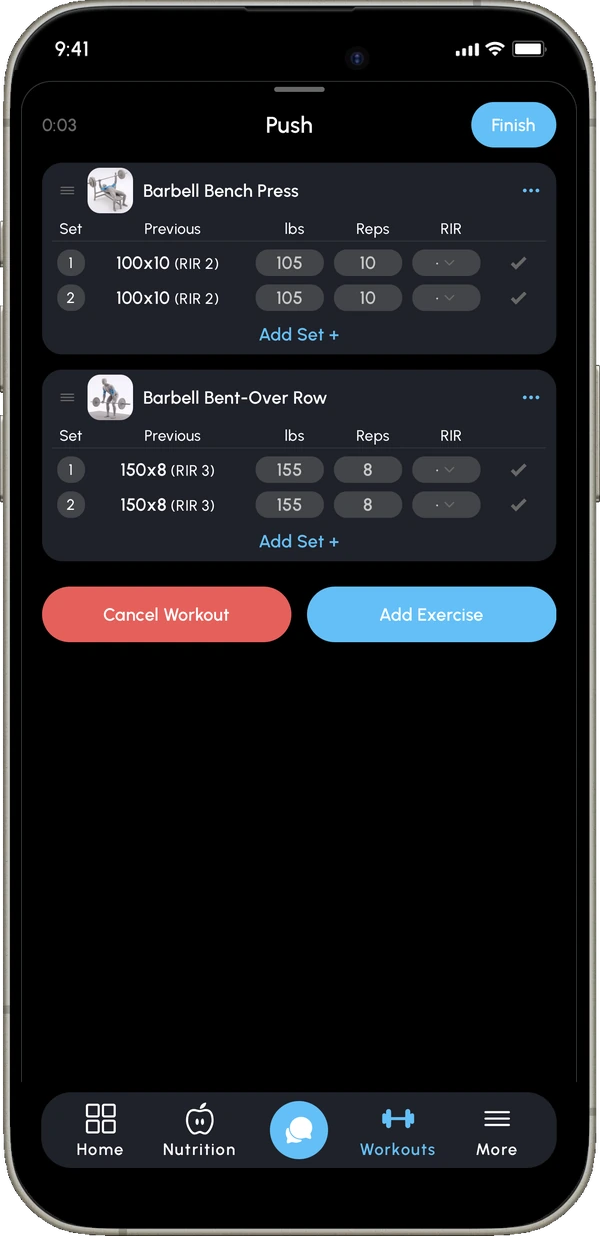
You can check this with your daily step count. If you averaged 8,000 steps when you started and you're at 5,000 now, you've lost part of your deficit to that drop. Our post on how many steps a day to lose weight covers what to aim for.
5. You're eating back calories
Watches and fitness trackers give you a rough guess at calories burned. A 2020 review of 158 studies found that no brand came within 3% of the true number more than 13% of the time, and some brands guessed high while others guessed low. When you eat those calories back, you eat the tracker's mistakes too. Our calorie counting guide shows a simpler way to handle workout calories.
6. You're losing fat, but the scale hasn't caught up
You can hold extra water for a week or two after you start a new training program, eat a salty or high-carb meal, or start creatine. That water can cover up the fat you've lost. See How much water is enough? and How much creatine should you take a day?
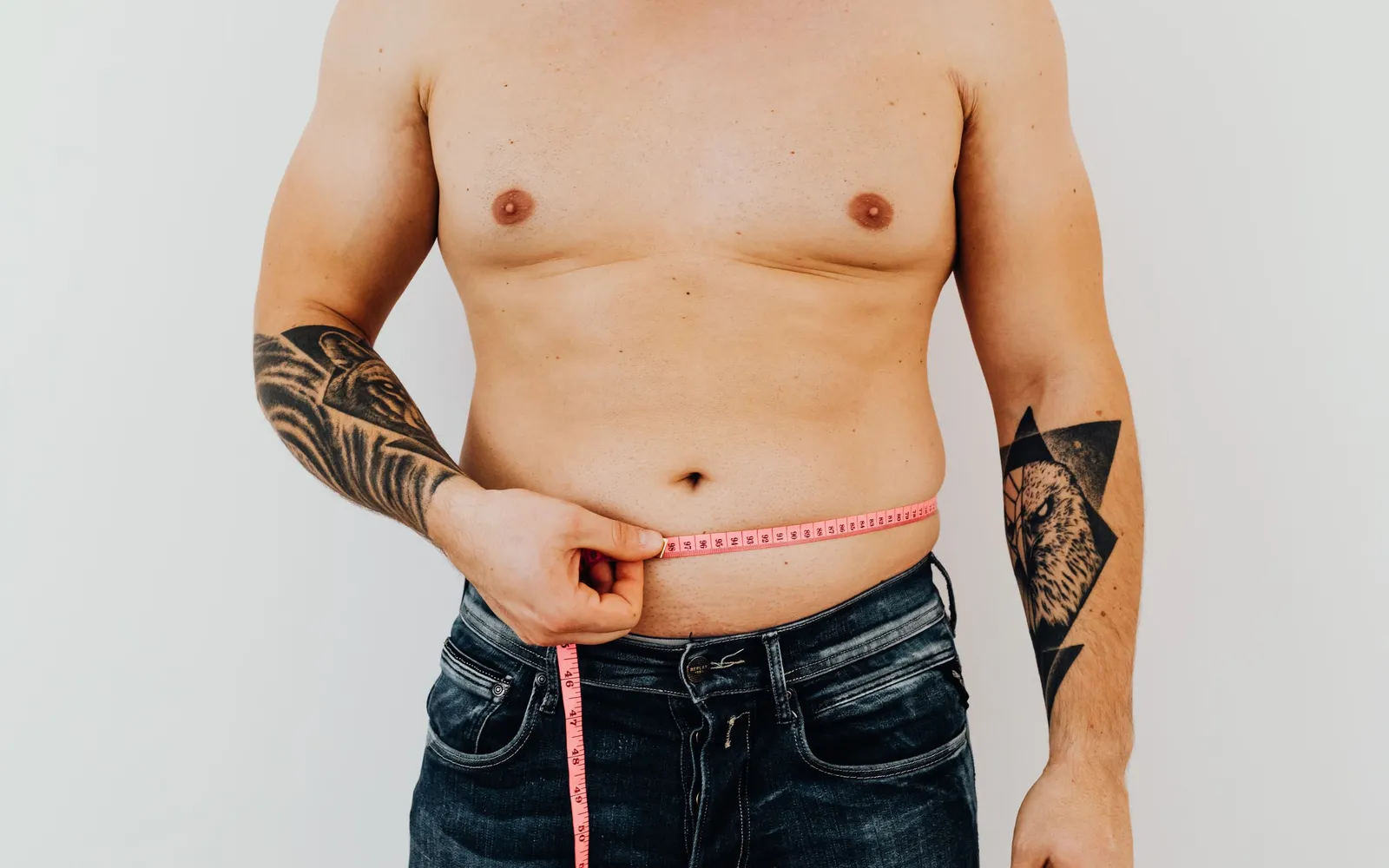
If you're new to lifting, you might also be adding muscle while you lose fat. If your waist is getting smaller while the scale holds steady, that's likely what's happening. See Body recomposition.
7. A health condition or medicine
The U.S. National Institute of Diabetes and Digestive and Kidney Diseases lists conditions that can affect your weight, including an underactive thyroid (hypothyroidism), polycystic ovary syndrome (PCOS), Cushing's syndrome, depression, long-term stress and too little sleep. It also lists some medicines, including some antidepressants and seizure medicines, steroids, insulin and some blood pressure medicines.
These can make it harder to lose weight, for example by making you hungrier or more tired, but you still need to eat fewer calories than you burn to lose fat. The way you get to that deficit may look different from someone else's. You might eat more protein and fiber so smaller meals keep you full, add more daily movement, or set a lower target than a calculator gives you. Our high-protein foods and high-fiber foods lists are a good place to start.
If you've checked everything above and you're still not losing, talk to your doctor about what might be in the way. Keep taking your medicines as prescribed unless your doctor changes them.
What to try next
Give each change two or three weeks before you move to the next one:
- Track your weekly average weight instead of single weigh-ins.
- Weigh and log everything you eat for two weeks, weekends included, using entries that match the label.
- Work out your calorie target again at your current weight.
- Compare your daily steps now with your steps when you started.
- If your average still hasn't moved, lower your target a little. Our calorie counting guide explains how much.

Common questions
Is "starvation mode" real?
No. Your body can burn a little less while you diet. In a 2020 study, the gap was about 50 calories a day, and better-designed studies often find small or no effect. You'll keep losing as long as you stay in a deficit.
How long should I wait before changing my calories?
About two to three weeks. Over a shorter stretch, water, a salty meal or the day you weigh in can throw off your numbers.
Why am I gaining weight in a calorie deficit?
Over a few days, it's usually water. If your weekly average keeps climbing for several weeks, you're likely eating more than you think, so check your logging and your target first.
Can I be in a deficit and not lose weight?
Potentially for a week or two, yes, because water can cover up the change. With that being said, a real net calorie deficit will always lead to weight loss.
Sources
- Turicchi J. et al. Weekly, seasonal and holiday body weight fluctuation patterns among individuals engaged in a European multi-centre behavioural weight loss maintenance intervention. PLoS One (2020).
- Burrows T.L. et al. Validity of dietary assessment methods when compared to the method of doubly labeled water: a systematic review in adults. Frontiers in Endocrinology (2019).
- Chan V. et al. Using wearable cameras to assess foods and beverages omitted in 24 hour dietary recalls and a text entry food record app. Nutrients (2021).
- U.S. Food and Drug Administration. 21 CFR 101.9, Nutrition labeling of food.
- Finlay A. et al. Accuracy of menu calorie labelling in the England out-of-home food sector during 2024: assessment of a national food policy. British Journal of Nutrition (2025). (Disclosure: one author has received unrelated research funding from food and beverage companies.)
- Evenepoel C. et al. Accuracy of nutrient calculations using the consumer-focused online app MyFitnessPal: validation study. Journal of Medical Internet Research (2020).
- Hall K.D. and Kahan S. Maintenance of lost weight and long-term management of obesity. Medical Clinics of North America (2018). (Disclosure: one author holds a patent on a method for weight management.)
- Martins C. et al. Metabolic adaptation is not a major barrier to weight-loss maintenance. American Journal of Clinical Nutrition (2020). (Disclosure: one author co-founded a weight management company.)
- Nunes C.L. et al. Does adaptive thermogenesis occur after weight loss in adults? A systematic review. British Journal of Nutrition (2022).
- Silva A.M. et al. What is the effect of diet and/or exercise interventions on behavioural compensation in non-exercise physical activity and related energy expenditure of free-living adults? A systematic review. British Journal of Nutrition (2018).
- Fuller D. et al. Reliability and validity of commercially available wearable devices for measuring steps, energy expenditure, and heart rate: systematic review. JMIR mHealth and uHealth (2020). (Disclosure: one author later worked for a wearable device company.)
- National Institute of Diabetes and Digestive and Kidney Diseases. Factors affecting weight and health (reviewed 2023).